




High Quality Integrated Circuit Sensor - Integrated Circuit Electronics Supplier New and Original In Stock Bom Service TPS22965TDSGRQ1 – Yingnuode
.png)
High Quality Integrated Circuit Sensor - Integrated Circuit Electronics Supplier New and Original In Stock Bom Service TPS22965TDSGRQ1 – Yingnuode Detail:
Product Attributes
| TYPE | DESCRIPTION |
| Category | Integrated Circuits (ICs) |
| Mfr | Texas Instruments |
| Series | Automotive, AEC-Q100 |
| Package | Tape & Reel (TR)
Cut Tape (CT) Digi-Reel® |
| SPQ | 3000 T&R |
| Product Status | Active |
| Switch Type | General Purpose |
| Number of Outputs | 1 |
| Ratio – Input:Output | 1:1 |
| Output Configuration | High Side |
| Output Type | N-Channel |
| Interface | On/Off |
| Voltage – Load | 2.5V ~ 5.5V |
| Voltage – Supply (Vcc/Vdd) | 0.8V ~ 5.5V |
| Current – Output (Max) | 4A |
| Rds On (Typ) | 16mOhm |
| Input Type | Non-Inverting |
| Features | Load Discharge, Slew Rate Controlled |
| Fault Protection | - |
| Operating Temperature | -40°C ~ 105°C (TA) |
| Mounting Type | Surface Mount |
| Supplier Device Package | 8-WSON (2×2) |
| Package / Case | 8-WFDFN Exposed Pad |
| Base Product Number | TPS22965 |
Load switches are space-saving, integrated power switches. These switches can be used to ‘disconnect’ power-hungry subsystems (when in standby mode) or for point-of-load control to facilitate power sequencing. Load switches were created when smartphones became popular; as phones added more functionality, they required higher density circuit boards and space became scarce. Integrated load switches solve this problem: returning board space to the designer while integrating more functionality.
What are the advantages of an integrated load switch compared to a discrete circuit?
A typical discrete solution consists of a P-channel metal oxide semiconductor field effect transistor (MOSFET), an N-channel MOSFET, and a pull-up resistor. While this is a proven solution for switching power rails, it has a large footprint. More compact solutions are now available, such as load switches like the Texas Instruments TPS22915 – they have a footprint of less than 1mm2! Figure 2 shows a comparison of one customer’s implementation with this TI solution, which enabled the TPS22968 to reduce its footprint by more than 80% while integrating more features such as controlled swing rate and fast output discharge.
Why do I need a controlled slew rate?
All TI load switches have a controlled swing rate to reduce inrush current, also known as a ‘soft start function. By slowly increasing the charging rate of its output capacitors, the load switch prevents the supply voltage from “dropping” due to the rapid charging of the load capacitors. For more information on reducing inrush current, please read the application note: “Managing Inrush Current”.
What is Rapid Output Discharge?
The fast output discharge function, available on most load switches, ensures that a disconnected or disabled load is not floated. As shown in Figure 3 above, a low ‘on’ input turns off the channel element and turns on the discharging field effect transistor (FET) via the inverter. This creates a path from VOUT to GND, ensuring that the load can be quickly returned to a known 0V ‘off’ state.
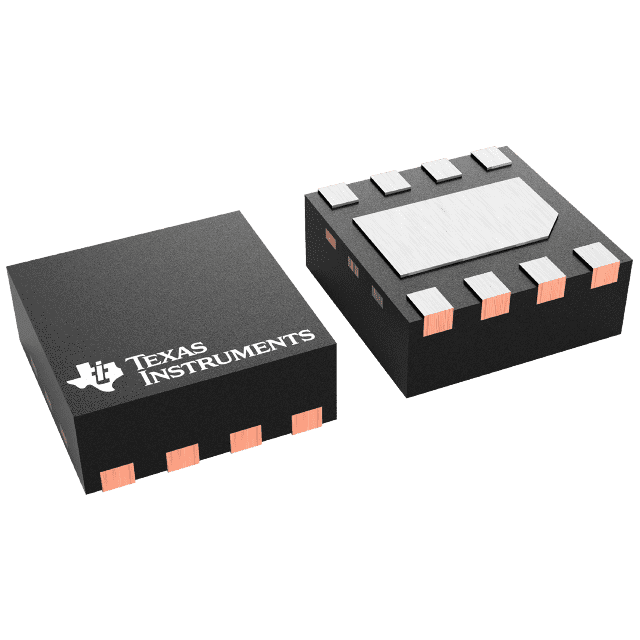
Product detail pictures:
Related Product Guide:
We consistently execute our spirit of ''Innovation bringing progress, Highly-quality ensuring subsistence, Administration advertising and marketing gain, Credit history attracting buyers for High Quality Integrated Circuit Sensor - Integrated Circuit Electronics Supplier New and Original In Stock Bom Service TPS22965TDSGRQ1 – Yingnuode , The product will supply to all over the world, such as: Peru, Auckland, Turkmenistan, we rely on own advantages to build a mutual-benefit commerce mechanism with our cooperative partners. As a result, now we have gained a global sales network reaching the Middle East, Turkey, Malaysia and Vietnamese.
 By Dawn from Argentina - 2017.09.22 11:32
This is the first business after our company establish, products and services are very satisfying, we have a good start, we hope to cooperate continuous in the future!
By Amelia from Madrid - 2018.10.09 19:07
-
High Quality for Arduino Integrated Circuit - ...
-
Lowest Price for Digital Integrated Electronics...
-
China Manufacturer for Lm Timer Ic - New and o...
-
High definition Semiconductor Integrated Circui...
-
Manufacturer of Sound Processor Ic - Electroni...
-
Personlized Products Types Ic - AMC1301DWVR IN...